Preventive Care
Oral Cancer Screening in Rapid City, South Dakota
A quick, painless exam built into your routine checkup that looks for early warning signs most people would never notice on their own.
Preventive Care
A quick, painless exam built into your routine checkup that looks for early warning signs most people would never notice on their own.
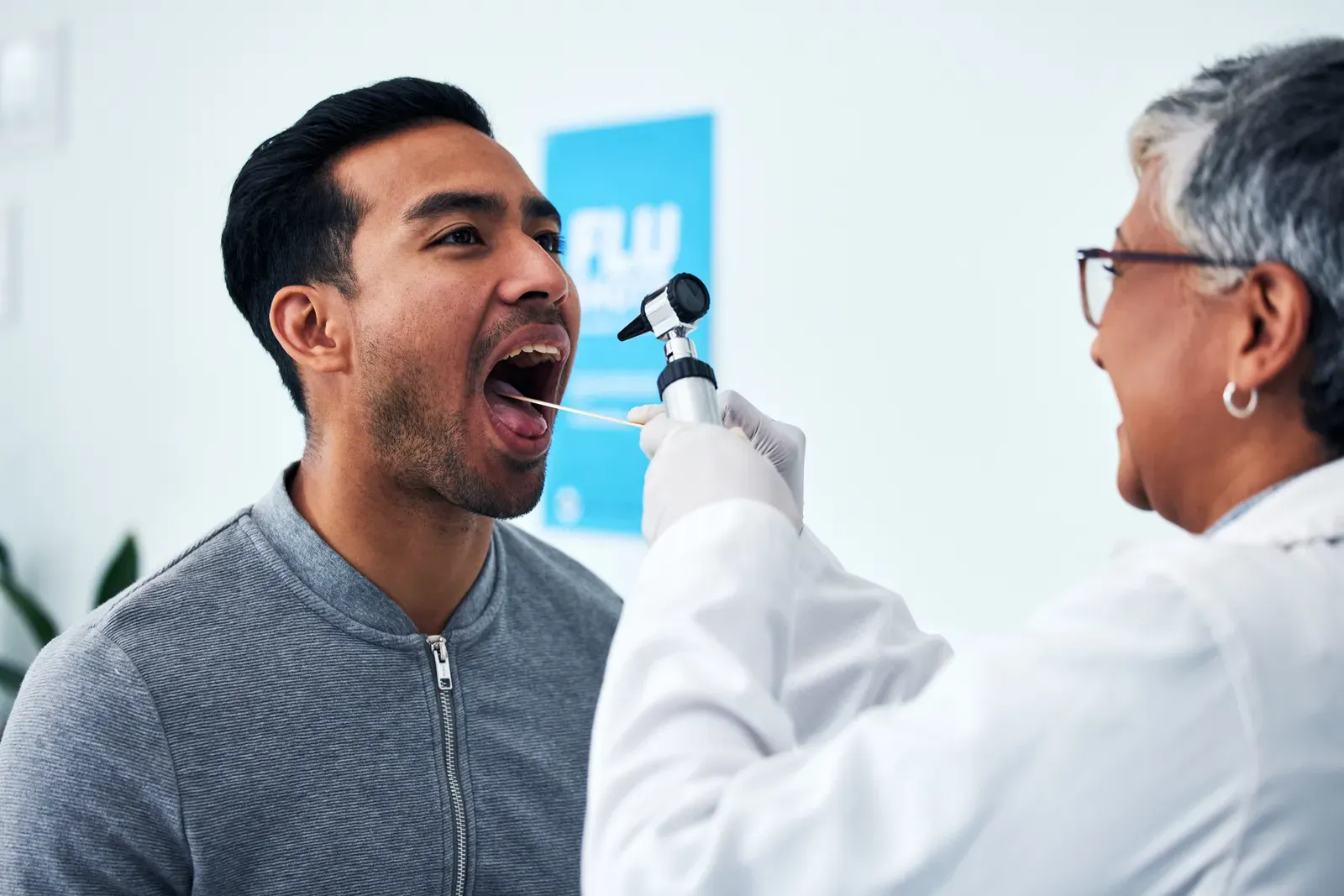
Most people never think to check their own mouth for anything beyond a cavity or a chipped tooth. Yet the soft tissues of your mouth, tongue, gums, and throat can develop changes long before they cause pain or become visible to the naked eye. That is exactly why oral cancer screening is built into every routine exam at Downtown Dental. It takes just a few extra minutes, requires no special preparation, and gives you a layer of protection that a mirror at home simply cannot provide.
Oral cancer can affect the lips, tongue, cheeks, floor of the mouth, hard and soft palate, and the back of the throat. In its early stages, it often looks like a harmless sore, a rough patch, or a slight discoloration, which is why so many cases go unnoticed until they have progressed. When caught early, treatment outcomes improve dramatically, and the course of care is almost always less invasive. Our clinical team examines tissue patterns, texture changes, and coloration during every screening, comparing what we see against your dental history so nothing gets overlooked.
We approach every screening with the same philosophy we apply to the rest of your care: look closely, document carefully, and talk openly with you about anything we find. If something warrants a closer look, we will walk you through next steps calmly and clearly, without alarming language or unnecessary delay. You deserve a dental visit that looks after your whole mouth, not just your teeth.
Oral cancer presents differently from person to person, and many early changes cause no discomfort at all. Knowing what to watch for between visits helps you bring concerns to our attention sooner rather than later.
None of these signs automatically mean cancer, and most turn out to have simple explanations. Still, a professional evaluation rules out serious causes early, before a minor issue has the chance to become a major one.
Oral cancer rarely has a single cause. Lifestyle habits, viral exposure, and genetics often combine, which is why screening matters for every patient, not just those who fit an obvious risk profile.
Cigarettes, cigars, pipes, and smokeless tobacco are the single largest contributing factor in oral cancer diagnoses. The chemicals involved irritate and damage soft tissue with every use, compounding over years of exposure.
Frequent, heavy alcohol use is linked to a higher incidence of oral cancer, and the risk rises sharply when combined with tobacco use. Alcohol can act as an irritant that makes tissue more vulnerable to damage.
Certain strains of human papillomavirus are increasingly linked to cancers of the throat and tonsils. This risk factor affects younger, otherwise healthy patients who may not expect to be screened.
Years of unprotected sun exposure can damage the delicate skin of the lower lip, raising the risk of lip cancer in patients who spend significant time outdoors without protection.
Risk naturally increases with age, and a family history of oral or throat cancers can raise your personal risk profile. This is one reason screening becomes a standard part of care as patients get older.
Diets low in fruits and vegetables have been associated with higher rates of oral cancer, likely due to reduced intake of antioxidants that help protect cells from damage over time.
We built our screening process to fit seamlessly into your regular dental checkup, so protecting your long-term health never means an extra trip or a complicated appointment.
We start by asking about your medical history, tobacco or alcohol use, and any new symptoms you have noticed. This conversation helps us focus our exam on anything specific to your situation.
We visually examine your lips, cheeks, gums, tongue, and the roof and floor of your mouth, then gently feel the tissues of your neck and jaw for lumps or swelling that might not be visible.
Any area of concern is photographed and noted in your chart so we can track it over time. This lets us tell quickly whether something is new, changing, or stable from visit to visit.
We walk you through exactly what we saw, in plain language, and explain whether it is something to simply monitor or something that calls for a referral to a specialist for further testing.
Screening becomes part of your regular schedule going forward, so changes get caught early and your long-term oral health stays on our radar at every future visit.
Regular screening gives you something more valuable than reassurance alone. It builds an ongoing record of your oral health that helps catch subtle changes the moment they appear.
Catching tissue changes at their earliest stage generally means less invasive treatment and a smoother recovery if care is ever needed.
Screening adds information your physician may not otherwise see, connecting your dental visits to your broader health picture.
The exam adds only a few minutes to your cleaning or checkup and involves no needles, scans, or downtime of any kind.
Consistent records let our team spot subtle shifts in tissue that would be nearly impossible to notice without a documented comparison.
The tissues inside your mouth are moist, flexible, and constantly in motion from talking, eating, and swallowing. Early signs of abnormal cell growth often blend into this busy environment, appearing as a slightly rough patch or a faint discoloration that most people assume is simply irritation from a hot drink or a bite from the inside of the cheek. Without a trained eye looking specifically for these patterns, it is easy for weeks or even months to pass before something gets noticed.
Unlike a cavity, which often announces itself with sensitivity or visible decay, early oral tissue changes are frequently painless. That absence of discomfort is part of what makes regular screening so important. A lesion that feels like nothing at all today can, left unexamined, progress into something far more serious over time, which is why we treat this part of your exam with the same seriousness as checking for gum disease or bite problems.
Our clinical team has seen firsthand how early identification changes the trajectory of care for patients. A quick referral to an oral surgeon or specialist for a biopsy, prompted by something we noticed at a routine visit, can mean the difference between a minor procedure and a far more complex treatment path. That is the real value of making screening a standard part of your care, not an occasional add-on.
Daily habits will not replace professional screening, but they do reduce your overall risk and help you notice changes sooner yourself.
Quitting smoking or chewing tobacco at any age measurably lowers your risk and improves healing throughout your mouth.
Moderating alcohol consumption reduces irritation to soft tissue and lowers your combined risk alongside other factors.
A lip balm with SPF protects delicate skin during long days outdoors, especially in sunny South Dakota summers.
Use a mirror and good lighting once a month to look for new sores, patches, or lumps between your dental visits.
Fruits and vegetables rich in antioxidants help support healthy tissue and may lower your overall cancer risk.
Consistent checkups ensure screening happens on schedule, giving us the best chance of comparing tissue over time.
These habits give you more control over your risk, but they are not a substitute for a professional exam. If you notice anything unusual between visits, please call us rather than waiting for your next scheduled checkup.
"We want every patient to leave their appointment feeling informed, not anxious. A screening is simply one more way we look after you, and we always take time to explain exactly what we found and what it means."
Answers to common questions about oral cancer screening at Downtown Dental.
BOOK YOUR VISIT
Join the Rapid City families who trust Downtown Dental. New patients and emergencies are always welcome.