Restorative Care
Dental Bridges in Rapid City, South Dakota
Close the gap left by missing teeth with a secure, natural-looking bridge crafted to restore your bite and your smile.
Restorative Care
Close the gap left by missing teeth with a secure, natural-looking bridge crafted to restore your bite and your smile.
A missing tooth never stays quiet for long. Within weeks, neighboring teeth begin tilting into the open space, your bite shifts to compensate, and chewing on that side of your mouth starts to feel unreliable. At Downtown Dental, we see this pattern often in patients across Rapid City, and a well-fitted dental bridge is one of the most dependable ways to stop that drift before it reshapes your whole bite.
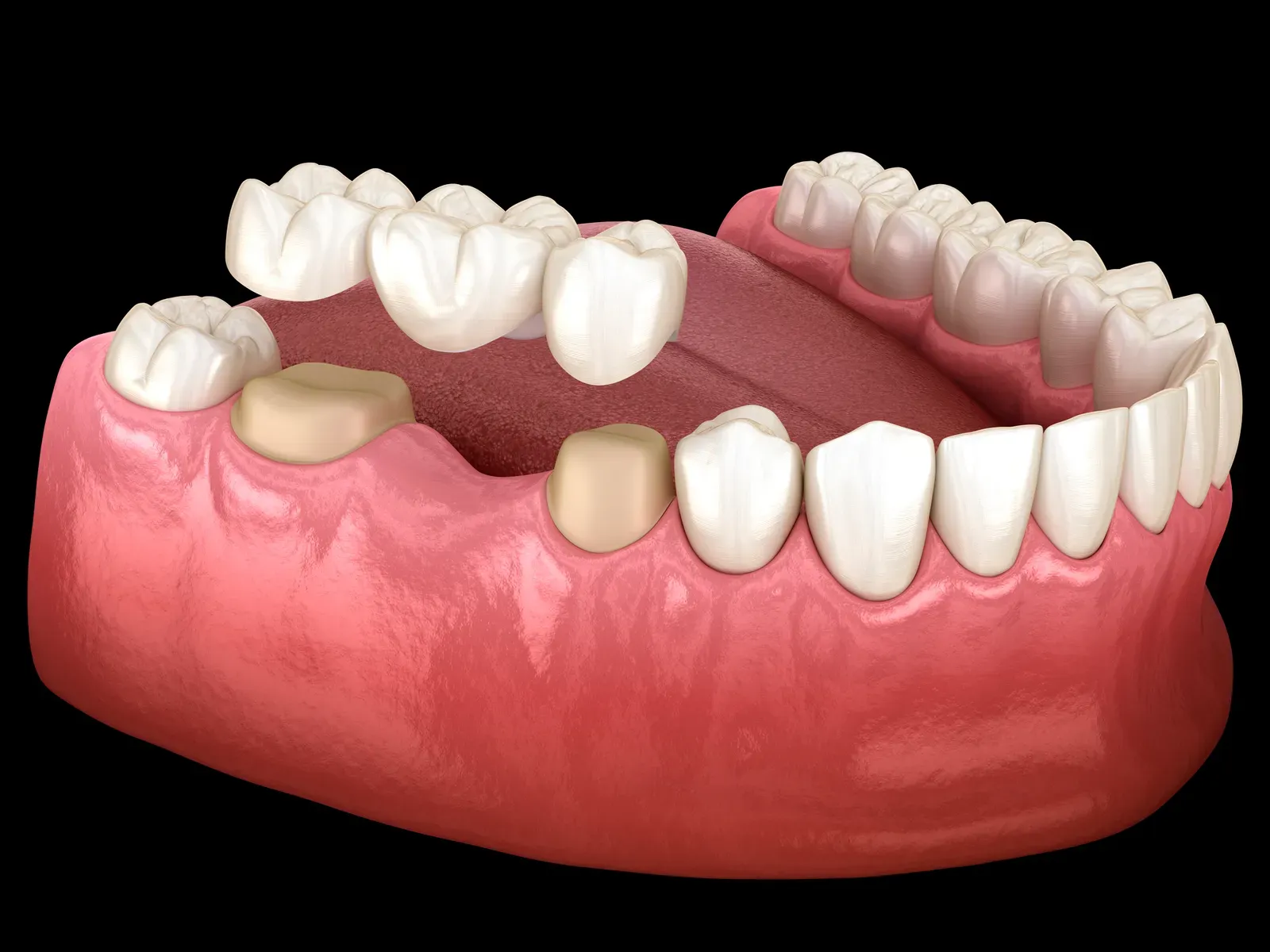
A dental bridge is a fixed restoration that literally bridges the gap created by one or more missing teeth. It consists of a replacement tooth, called a pontic, anchored in place by crowns placed over the healthy teeth or dental implants on either side of the space. Unlike a removable partial denture, a bridge stays cemented in your mouth around the clock, so it functions and feels much closer to your natural teeth when you bite, speak, and smile.
Our approach starts with understanding why the tooth was lost in the first place and whether the surrounding bone and gum tissue can comfortably support a bridge long-term. We take detailed measurements, evaluate your bite alignment, and walk you through every material option so the final restoration blends with your natural teeth rather than standing out from them.
Not everyone with a missing tooth needs a bridge right away, and not every gap is a candidate for one. The signs below are what we look for during a consultation, and they tend to show up differently depending on how long the tooth has been missing and where it sits in your mouth.
Every mouth is different, and some of these signs overlap with other dental issues. A thorough exam, including X-rays of the bone supporting your remaining teeth, helps us confirm that a bridge is the right long-term solution rather than a short-term fix that will need redoing.
Understanding why a tooth was lost helps us plan a bridge that will actually last. Several factors commonly combine to create the kind of gap that calls for a fixed restoration.
Untreated cavities that reach deep into the tooth structure can eventually require extraction, leaving a gap that needs a stable replacement to prevent shifting.
Periodontal disease breaks down the bone and tissue that hold teeth in place, which is one of the leading causes of adult tooth loss we see in our chair.
A direct impact from a fall, accident, or sports injury can fracture a tooth beyond repair, especially front teeth that take the brunt of the force.
Years of clenching and grinding wear down enamel and crack tooth structure, gradually weakening a tooth until it can no longer be saved.
Skipping routine checkups allows small problems to progress unnoticed until the only remaining option is extraction and replacement.
Some patients are born with a congenitally missing tooth or have structurally weaker enamel that makes long-term tooth retention more difficult.
Getting a bridge placed correctly takes planning, precision, and a bit of patience. Here is what the process typically looks like when you work with our team.
We start by talking through your concerns, your history with the missing tooth, and what you'd like the final result to look and feel like day to day.
Digital X-rays and a close exam of the abutment teeth and surrounding bone tell us whether a traditional bridge, an implant-supported bridge, or another restoration fits your situation best.
We select the bridge material, shade, and design that matches your bite and your neighboring teeth, then walk you through the timeline and what each visit will involve.
We prepare the abutment teeth, take precise impressions, and fit you with a comfortable temporary bridge while your permanent restoration is crafted to exact specifications.
Once your bridge is cemented, we check your bite alignment and schedule follow-up visits to make sure the fit stays comfortable and the surrounding gums stay healthy.
A dental bridge does more than fill a visible gap. It restores function and structure that affect your whole mouth over time.
With a stable bridge in place, you can chew on both sides of your mouth again without favoring one side or avoiding certain foods altogether.
Filling the gap keeps neighboring teeth from drifting and prevents opposing teeth from shifting out of their normal position.
Gaps, particularly near the front of the mouth, can affect how certain sounds form. A bridge restores the structure needed for natural speech.
Many patients tell us they smile more freely again once a visible gap has been closed with a restoration that matches their natural teeth.
Replacing a lost tooth helps maintain the natural contour of your cheeks and jawline rather than allowing gradual sagging around the gap.
A properly fitted bridge distributes bite force evenly, reducing excess strain that an unfilled gap places on your remaining natural teeth.
A bridge that sits even slightly high or low on your bite creates uneven pressure every time you chew. Over months, that uneven force can lead to soreness in the jaw joint, premature wear on the abutment teeth, and in some cases loosening of the cement holding the crowns in place. This is why we spend extra time checking your bite with articulating paper and making small adjustments before you leave the chair.
The margins where the bridge meets your natural tooth structure matter just as much. A poorly sealed margin gives bacteria an entry point, which can lead to decay underneath the restoration even though the visible crown looks fine. We use precise impression techniques and quality dental laboratories to make sure those margins are tight and smooth.
Getting these details right the first time is what separates a bridge that lasts ten-plus years from one that needs early replacement. It is also why we recommend regular checkups after placement, so we can catch any shifting or wear long before it becomes a bigger problem.
Your daily habits have a direct effect on how long your bridge lasts. These simple adjustments go a long way toward protecting your investment.
Use a floss threader or water flosser to clean beneath the replacement tooth, where a standard string of floss cannot reach.
Ice, hard candy, and sticky caramel place unnecessary stress on the bridge and the teeth anchoring it in place.
If you clench or grind at night, a custom nightguard protects your bridge from the repetitive forces that cause early wear.
Professional cleanings every six months remove plaque buildup near the margins that daily brushing alone can miss.
Gentle brushing twice daily protects the gum tissue around the abutment teeth while still clearing away plaque effectively.
If your bridge ever feels loose or shifts slightly, call us promptly rather than waiting, since early attention prevents bigger repairs later.
These habits make a real difference, but they work alongside professional care, not instead of it. Regular checkups remain the best way to catch small issues before they affect the bridge or the teeth supporting it.
"We never rush a bridge fitting. Getting the bite and margins right the first time is what keeps patients comfortable and avoids costly repairs down the road."
Answers to the questions we hear most often from Rapid City patients considering dental bridges.
BOOK YOUR VISIT
Join the Rapid City families who trust Downtown Dental. New patients and emergencies are always welcome.