Restorative Dentistry
Dental Crowns in Rapid City, South Dakota
Strengthen and protect weakened teeth with custom-fitted crowns crafted for comfort, durability, and a natural smile.
Restorative Dentistry
Strengthen and protect weakened teeth with custom-fitted crowns crafted for comfort, durability, and a natural smile.
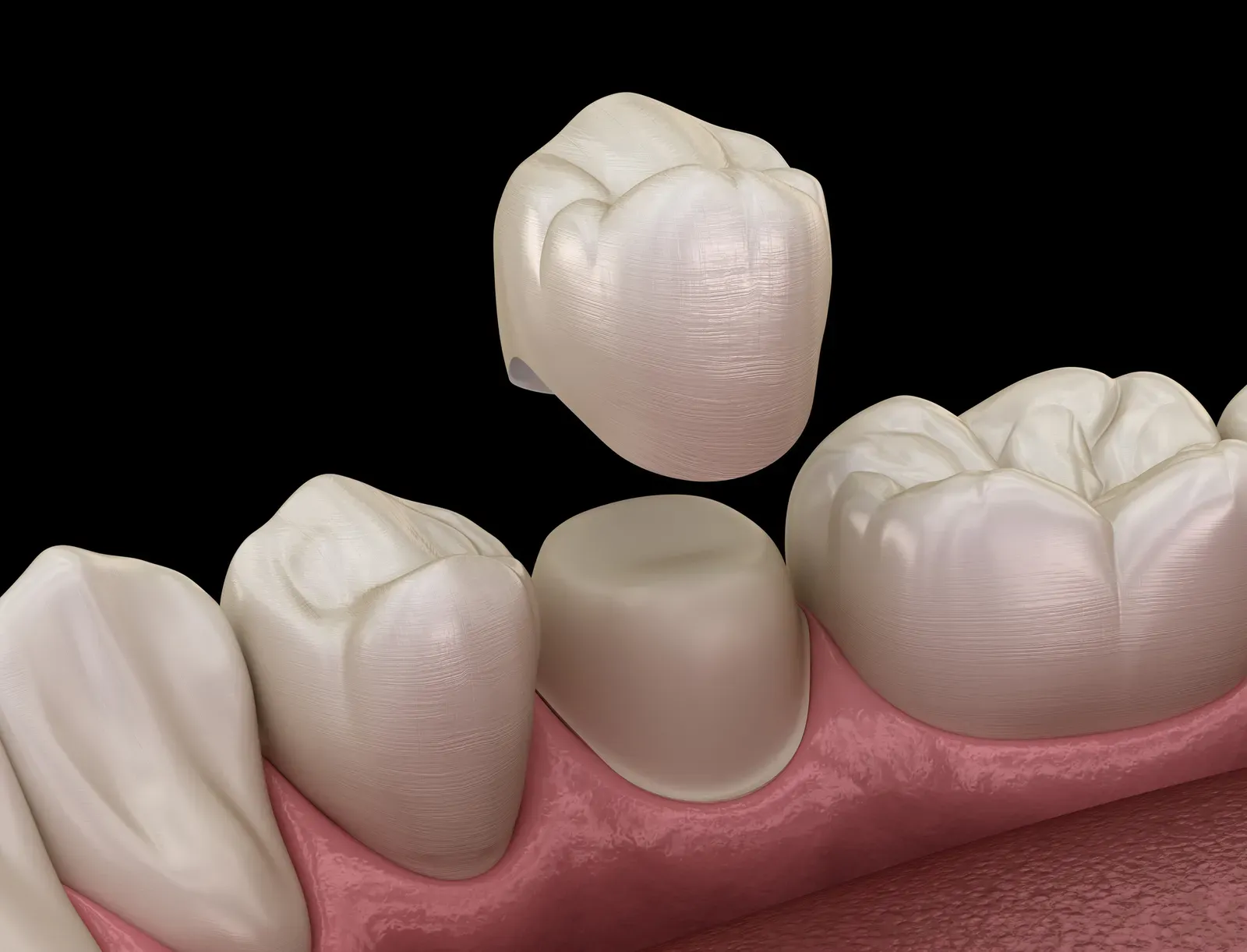
A tooth weakened by a large filling, a deep crack, or a root canal doesn't always need to come out. In many cases, it simply needs a crown - a custom-made cap that fits over the entire visible surface of a tooth, restoring its original shape, strength, and function. At Downtown Dental, we use dental crowns to protect compromised teeth from further damage while giving patients back the comfortable, confident bite they're used to.
When a tooth starts to crack, chip, or wear down, everyday activities like chewing a sandwich or biting into an apple can become genuinely uncomfortable. Some patients notice sharp sensitivity to hot or cold, while others feel a nagging ache that worsens with pressure. Left untreated, a weakened tooth can fracture further or develop decay beneath an old filling, eventually threatening the tooth's survival entirely.
Our approach starts with a thorough clinical evaluation, including digital X-rays, to understand exactly what's happening beneath the surface. We talk through your options honestly, explain what a crown can and cannot fix, and only recommend treatment when it genuinely serves your long-term oral health. Our goal is always a durable, natural-looking result that feels like part of your own smile.
Tooth damage doesn't always announce itself with pain right away. Many patients live with early warning signs for months before scheduling an exam. Here's what we commonly see in patients who end up benefiting from a crown.
Any one of these signs on its own is worth a conversation with your dentist. Waiting too long often turns a straightforward restoration into a more involved procedure, so we always encourage patients to come in at the first sign of trouble rather than after a tooth breaks entirely.
Few teeth end up needing a crown for just one reason. Usually it's a combination of everyday wear, past dental work, and habits that quietly add up over years.
Teeth that have been filled or treated multiple times over the years gradually lose structural integrity, making them prone to fracture under normal biting force.
Bruxism applies forces far greater than normal chewing, slowly wearing down enamel and creating stress fractures that eventually require reinforcement.
Cavities that spread deep into a tooth before being addressed remove enough healthy tooth structure that a simple filling is no longer a dependable fix.
A fall, sports impact, or biting down on something hard can chip or crack a tooth instantly, even when the tooth was previously perfectly healthy.
Removing the nerve and blood supply from inside a tooth makes it more brittle over time, which is why most root-canaled teeth are capped with a crown.
Enamel thins gradually with age, leaving teeth more susceptible to cracking even without a specific injury or significant dental history.
Every crown we place is custom to your tooth, your bite, and your goals. Here's what you can expect from start to finish.
We start by listening to your concerns and symptoms, then review your dental history to understand how the affected tooth got to this point.
Digital X-rays and a close clinical exam let us see exactly how much healthy tooth structure remains and whether supporting treatment is needed first.
We walk you through crown material options, shade matching, and timeline so you know exactly what to expect before any preparation begins.
The tooth is gently reshaped under local anesthetic, precise impressions are taken, and a temporary crown protects the tooth while your permanent restoration is crafted.
Once your custom crown returns from the lab, we check the fit, bite, and color before permanently cementing it, then follow up to make sure it feels completely natural.
A well-fitted crown does more than patch a problem - it restores real function and confidence you may have quietly given up on.
With a crown fully supporting the tooth, you can bite down on firm foods again without worrying about pain or further cracking.
Once the exposed or cracked surface is sealed under a crown, sharp reactions to hot and cold typically fade within days.
Modern crown materials are shade-matched and shaped to blend with surrounding teeth, so the restoration simply looks like your own tooth.
A crown distributes biting forces evenly across the tooth, reducing the risk of the fracture spreading further and requiring extraction later.
A cracked tooth behaves differently than one that's simply decayed. Every time you bite down, the two sides of the crack flex slightly apart, which irritates the nerve inside and can eventually let bacteria travel deep into the root. This is why cracked teeth often cause an odd, specific kind of pain: sharp on release of a bite rather than during the bite itself.
Without a crown to hold the tooth together, that flexing tends to worsen the crack over time, sometimes extending it below the gumline where it becomes untreatable. At that point, extraction is often the only remaining option. A crown placed early, while the crack is still confined to the upper portion of the tooth, essentially acts as a cast, stabilizing the tooth before the damage spreads.
This is also why we take fractures seriously even when pain is mild or intermittent. Catching a crack in its early stage, often visible only under magnification or with specific biting tests, allows us to save a tooth that would otherwise be lost within a year or two.
A crown can last well over a decade with the right daily habits. These simple steps go a long way toward protecting your investment.
Clean the margin where the crown meets your gumline carefully, since decay can still develop at the edge of a crowned tooth.
A custom nightguard absorbs clenching forces that would otherwise chip or loosen a crown over time.
Ice, pens, and hard candy put the crown at risk of fracture, even though the underlying tooth is now reinforced.
Regular checkups let us catch any shifting or wear at the crown margin before it becomes a bigger problem.
New discomfort around a crowned tooth, even mild, is worth mentioning at your next visit rather than waiting it out.
A gentle brush protects the gum tissue around the crown without wearing down the restoration's surface.
These habits support the lifespan of your crown, but they're not a substitute for regular professional checkups, which remain the best way to catch small issues early.
"We never recommend a crown just because it's an option on the chart. We recommend it because we genuinely believe it's the best way to save your tooth and keep you comfortable for years to come."
Answers to the questions we hear most often about dental crowns at Downtown Dental.
BOOK YOUR VISIT
Join the Rapid City families who trust Downtown Dental. New patients and emergencies are always welcome.